Starting
Every towering elaborateness involving modern automobiles necessitates an entire in-depth perception of diagnostic methods, ordinarily regarding On-Board Diagnostics II (OBD2) and Tire Pressure Monitoring Devices (TPMS). In Europe, Asia, and the US, these innovations perform using diverse frequencies. OBD2 specifications are largely coordinated globally, largely utilizing ISO 9141-50, KWP2000, CAN, and others, but regional deployments can generate minor modifications. TPMS, however, is where substantial frequency distinctions come up. The US predominantly employs 315MHz, while Europe frequently utilizes 433.92MHz, and Asia manifests a more varied range including both frequencies and further bands. As a result, faultless diagnostic instruments must be provided with the potential to process these various frequencies to facilitate effective troubleshooting and maintenance.
Revealing TPMS Sensor Frequencies: A Global Guide (Europe, North America, Asia)
Fathoming tire observing unit (TPMS) transmitter frequencies within the domain remains complicated. Usually, North America principally utilize 315 MHz, nonetheless some recent vehicles have 433 MHz. In contrast, Europe and most of Asia generally perform on the 433 MHz transmission, with some district variations manifesting mainly in certain Asian zones. Thus, important to prove the true signal prior to get hold of TPMS detectors to ensure accordance and evade potential troubles.
EV Diagnostic Tools: OBD2 Compatibility and TPMS Integration
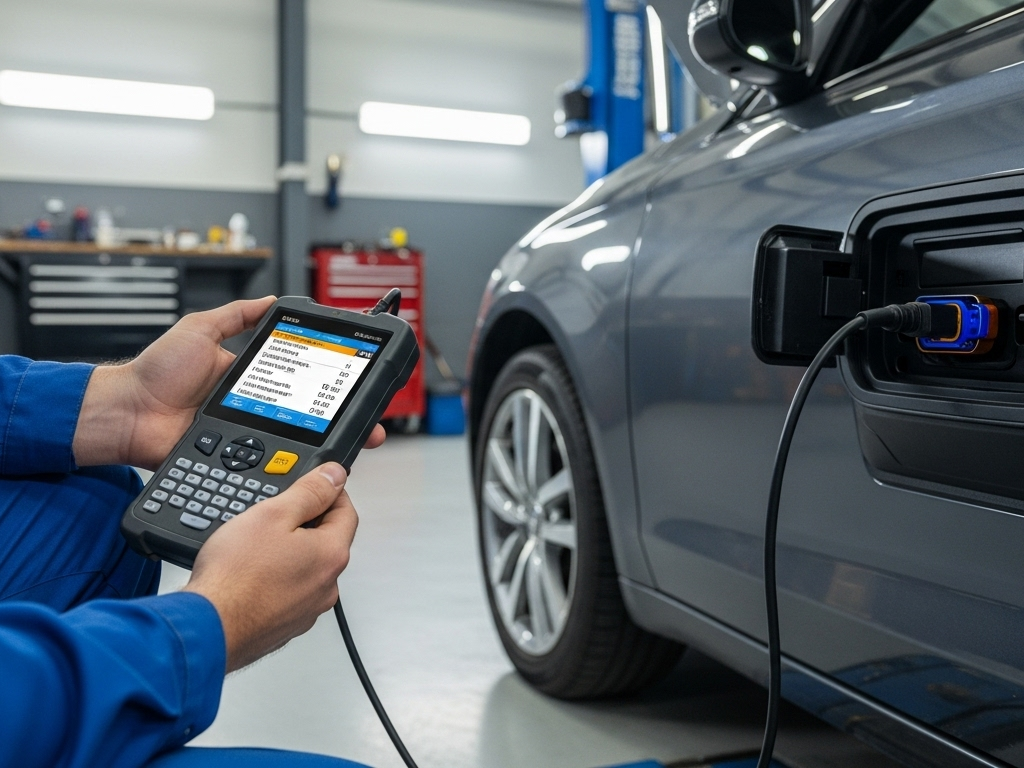
State-of-the-art electrified vehicle inspection gadgets are increasingly blending indispensable functionality, notably concerning both conventional On-Board Diagnostics II (OBD2) interface and Tire Pressure Monitoring System (TPMS) connection. Countless renewable motors utilize OBD2 ports for accessing essential system data, empowering technicians and owners to discover potential shortcomings. Furthermore, seamless TPMS linking provides valid tire tension reports, helping to optimized safety and combustion saving. This blend of OBD2 inputs and TPMS support exemplifies a remarkable improvement in voltage-driven vehicle assessment.
Tire Pressure Frequency Differences: Eurasia vs. USA vs. Asia - A Thorough Evaluation
Numerous sensors responsible for sensing tire force—TPMS—operate on distinct radio wavelengths, leading to considerable regional discrepancies. The United States predominantly utilizes 315 MHz, though some modern vehicles are changing to 433 MHz. European Region mandates 433.92 MHz, a specific frequency to maintain conformity across areas. East Asia exhibits a fragmented landscape, with distinct territories using 315 MHz, others 433 MHz, and still diverse zones employing a mix of both. This inconsistency results in challenges for service points and vehicle owners when dealing with replacement TPMS devices or diagnostic instruments, obliging careful authentication of regional parameters to elude errors and assure proper serviceability of the TPMS.
Auto Scanners for Battery-Powered Autos: Tire Info Examination & Radio Wave Breakdown
Current car inspectors are continually developing to enable voltage-driven rides, specifically relating to tire surveillance evaluation. Unlike petrol-driven automobiles, electric vehicles present distinct complexities when it comes to tire pressure system diagnostics. Many EVs use distinct tyre surveillance systems broadcasts requiring the reader to correctly decode the broadcast in use. This capacity facilitates mechanics to principally monitor wheel pressure but also determine the exact wavelength being emitted by the tire info probes, enabling in precise diagnosis of defects.
Asia Tire Monitoring Ranges: Which Want to Comprehend?
Understanding the world of transport TPMS can be a problem, primarily due to the varying wavelengths utilized across The EU, Asia, and the United States. European Union’s vehicles predominantly use 433.92 MHz, while various Asian countries employ 315 MHz and 433.92 MHz, creating a complex situation for mechanics. In the US, both 315 MHz and 433.92 MHz are frequently used, with 315 MHz being more dominant. Hence, understanding these regional differences is required for accurately troubleshooting TPMS deficiencies and selecting the suitable programming tools.
Developing those Primary Elements: Auto Scanning, Electric Rides, and Tire Sensor Network Sensor Transmission Identification
Concerning competent automobile experts, merely fathoming the foundations involving automotive diagnostics, energy-based car platforms, including tire sensor systems gadget frequency recognition represents one important further milestone. The former subjects dive about basic procedures, calling for tailored tools plus proficiency with the purpose of accurately pinpoint plus rectify tricky hurdles concerning rubber systems, volt configuration productivity, or powertrain error alerts. What's more, appropriately diagnosing pressure detection sensor signal rates – that are differ for specific brands even trim levels – usually indispensable to effective pairing.
Electric Auto Inspection: Using OBD2 Scanners to Troubleshoot TPMS
Inspecting Tire Pressure Monitoring Systems wheel pressure systems in electric vehicles battery vehicles often calls for more than only visual inspection. Modern OBD2 readers offer the ability to access TPMS data and identify potential concerns. Utilizing these gadgets, technicians can examine fault codes, test sensor state, and even trigger sensor assessments, allowing for efficient diagnosis of TPMS malfunctions and minimizing out-of-service duration. Those is especially essential given the rising complexity of EV electronics.
Navigating Tire Monitoring Broadcasts: A Simple Guide for European Union, Far East, and North American Zone
Reliably engaging with tire monitoring sensors amongst the Continent, Asian Subcontinent, and American Continent calls for a thorough command of the distinct radio frequencies they work with. Differing from a uniform system, different zones usually employs specific ranges. For instance Eurozone largely bases on 3-1-5 MHz frequency and 433.92 MHz frequency, while US and Canada generally applies 3-1-5 MHz frequency nevertheless some updated vehicles have the potential to include 433 MHz frequency range. the East exhibits a more diverse context, with over-the-air verification multiple frequency bands engaged, based on the locale and vehicle manufacturer.
- Ponder area guidelines regarding wireless signal.
- Check your car operating manual for particular wave.
- Leverage a sensor analyzer designed to processing several wavelengths.
